Composition:Plant Fiber
Pattern:Plain、Embossed
Weight:50-100gsm
Max.Width:320cm
Customizable Color:White
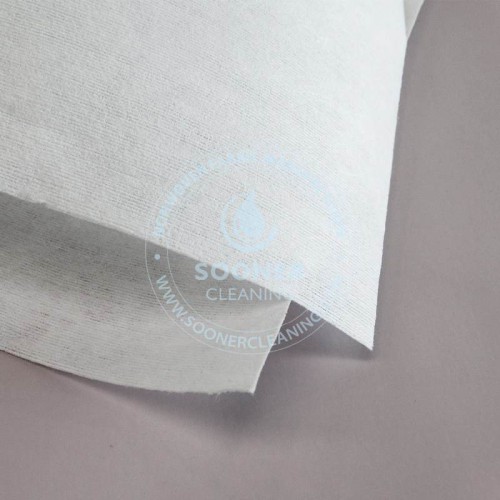
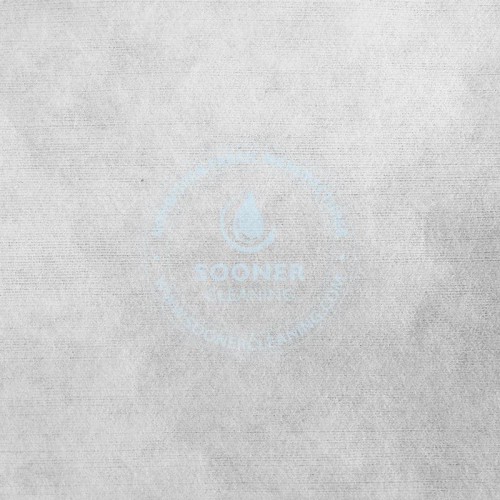
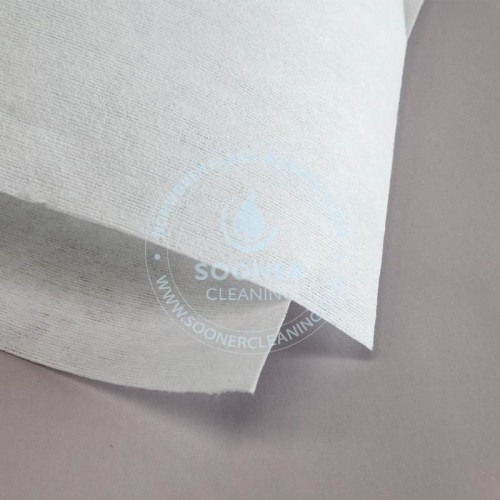
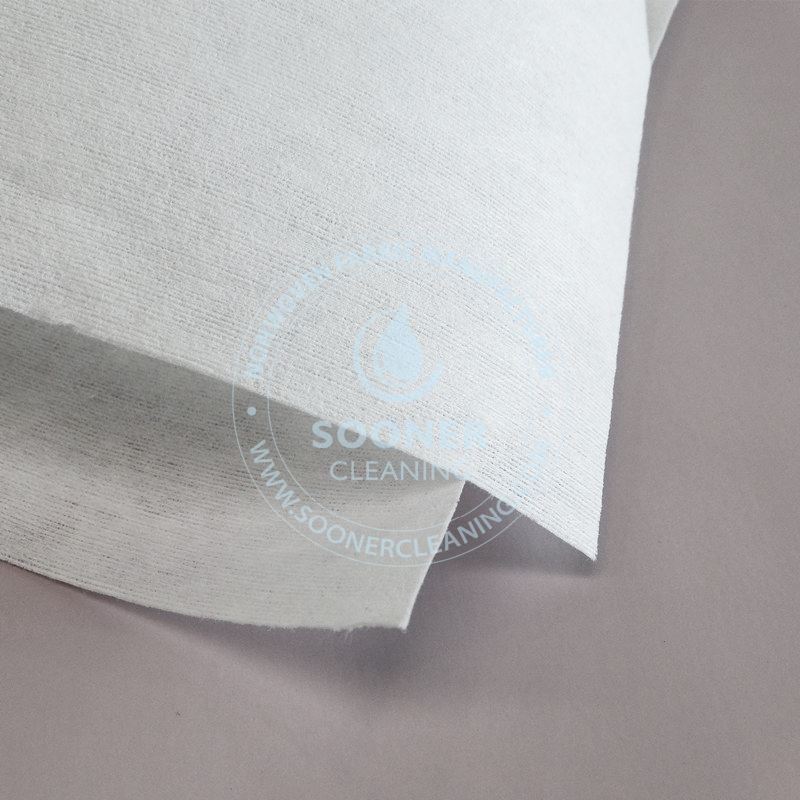
Our plain flushable product is a premium 100% plant fiber hydroentangled nonwoven engineered specifically for flushable wet wipes, moist toilet tissue, and personal hygiene applications where sewer-safe disposal is required. Manufactured using advanced hydroentanglement (spunlace) technology—a binder-free process that uses high-pressure water jets to mechanically entangle fibers—this fabric is composed entirely of short natural plant fibers (wood pulp, viscose, lyocell—typically 2–22mm in length), with no synthetic fibers and no chemical binders. This construction provides an optimal balance between in-use strength and post-flush dispersion, enabling the fabric to hold together during wiping yet quickly break apart when flushed, eliminating the risk of drain blockages while leaving no microplastic residue. The plain pattern provides a smooth, uniform surface that delivers consistent liquid distribution and a premium, silky hand-feel for gentle skin contact.
The global flushable biodegradable nonwoven fabric market was valued at USD 1.45 billion in 2024 and is projected to reach USD 3.28 billion by 2032, growing at a CAGR of 9.3%. With volume demand growing at 8.2% CAGR, driven by regulatory shifts and consumer demand for eco-friendly solutions, EDANA GD4 certification has become a business-critical requirement for flushable products entering US and European markets.
Our flushable substrate is available in two pattern variants, both maintaining full EDANA GD4 flushability compliance:
Plain pattern: Smooth, uniform surface offering gentle, streak-free cleaning—ideal for sensitive skin applications like baby wipes and facial wipes
Embossed pattern: Textured surface enhancing liquid capture and providing gentle scrubbing action—ideal for toilet wipes and multi-purpose flushable cleaning wipes
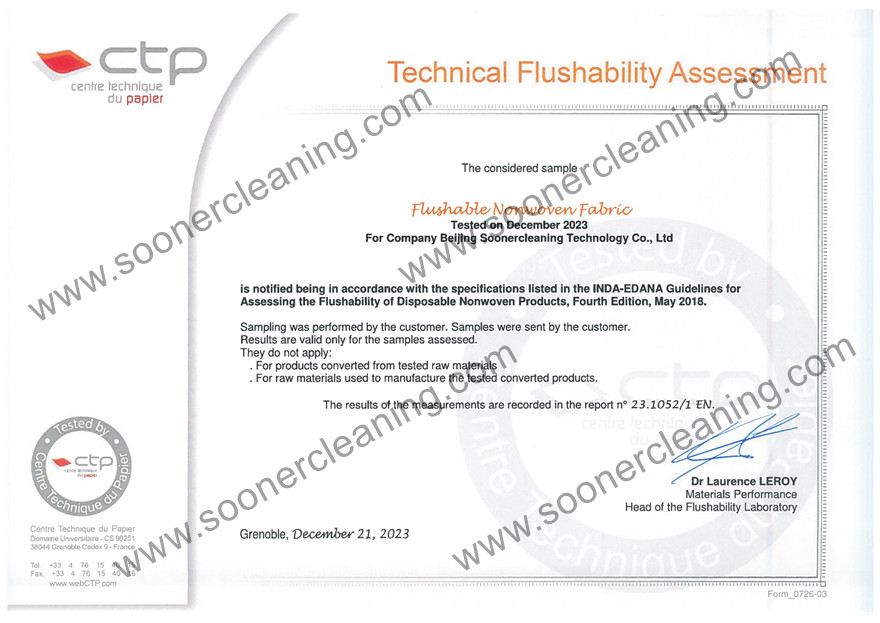
Our plain flushable product complies with the EDANA/INDA 4th Edition Guidelines for Flushable Products (GD4) —the most widely referenced global benchmark for flushable product development. A significant development for international suppliers is the global convergence around GD4: Standards Australia explicitly builds its national standard upon GD4 test methods, while Belgian and Spanish authorities have adopted GD4 provisions into law. Spain’s UNE 149002 standard requires both GD4 dispersion testing and mandatory “Do Not Flush” labeling for non-compliant products.
The GD4 certification encompasses seven rigorous tests simulating the complete journey from toilet to treatment plant:
| Test | Purpose |
| Toilet & Drainline Clearance | Confirms product clears residential toilets and drain lines |
| Slosh Box Disintegration | Measures controlled breakup in simulated sewer conditions (reduced to 60 minutes from 180 minutes in GD3) |
| Household Pump Test | Verifies no pump clogging in home sewage systems |
| Municipal Pump Test | Validates compatibility with municipal wastewater infrastructure |
| Settling Test | Ensures no sediment accumulation in sewer pipes |
| Aerobic Biodegradation | Confirms breakdown in oxygen-rich wastewater treatment |
| Anaerobic Biodegradation | Confirms breakdown in oxygen-free environments |
Products meeting GD4 guidelines must demonstrate complete disintegration within a maximum of 28 days, passing all seven tests to be certified as truly flushable and environmentally safe.
2025–2026 marks a watershed moment for flushable wipes regulation:
US (WIPPES Act): The proposed federal WIPPES Act mandates that non-flushable wipes carry conspicuous “Do Not Flush” labeling, creating a clear market division: only products that pass stringent testing protocols can confidently claim “flushable” status. Minnesota’s HF 3491, effective August 2025, requires flushable products to demonstrate compliance with specific dispersibility standards.
EU (Green Claims Directive): The EU’s Green Claims Directive (GCD) mandates that environmental marketing claims be scientifically substantiated, requiring independent third-party validation with traceable documentation.
UK Wet Wipes Ban: Wet wipes containing plastic will be banned in Wales from 18 December 2026, in England from 19 May 2027. Products containing polyester or polypropylene fibers will fall under these bans, while 100% plant fiber flushable products are unaffected.
| Feature | Benefit |
| 100% Plant Fiber Composition | No synthetic fibers, no microplastic residue, fully biodegradable |
| Short Fiber Structure (2–22mm) | Enhanced dispersibility, rapid breakdown when flushed, superior runnability on converting lines |
| EDANA GD4 Certified | Verifiable flushability compliance through 7 rigorous tests; meets EU Green Claims Directive requirements |
| Plain Pattern | Smooth, uniform surface, streak-free cleaning, gentle on sensitive skin |
| Binder-Free Hydroentangled Technology | No chemical binders, no fluorescent agents, preserves natural fiber properties, hypoallergenic |
| High Wet Strength & Low Linting | Holds together during use, minimal fiber shedding |
| High Absorbency | 7–10 times its own weight; rapid liquid uptake for efficient cleaning |
| 320cm Max Width | Efficient processing for large-scale converting operations |
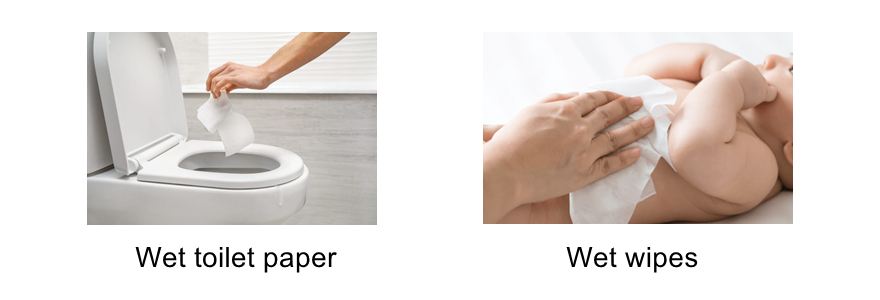
Moist toilet tissue: Soft, residue-free flushing toilet wipes
Flushable wet wipes (personal hygiene) : Feminine wipes, adult care wipes, family toilet wipes
Baby wipes (flushable variants): Gentle on sensitive infant skin
Intimate cleansing wipes: Gentle, skin-friendly flushable hygiene products
Travel & on-the-go: Portable flushable wipes for convenient sanitation
Produced on Industry 4.0 spunlace production lines with real‑time quality monitoring, our plain flushable product delivers consistent basis weight, uniform absorbency, and reliable tensile strength batch after batch—critical for high‑speed converting operations. The hydroentanglement process—using high‑pressure water jets to mechanically entangle plant fibers without chemical binders—preserves the natural properties of the cellulosic fibers while ensuring the dispersibility required for GD4 compliance. Hydroentangled wetlaid production dominates installed capacity in 2026 and remains the most practical manufacturing route for flushable end products. Wood pulp and short-cut rayon/lyocell are the primary raw materials, balancing absorbency, structural integrity, and cost.
The fabric is compatible with standard converting equipment including slitting, folding, stacking, and packaging machinery. Customization support is available for grammage (50–100 GSM), pattern (plain/embossed), and width to meet specific OEM/ODM requirements for toilet tissue, personal care brands, and private label flushable wipes manufacturing.