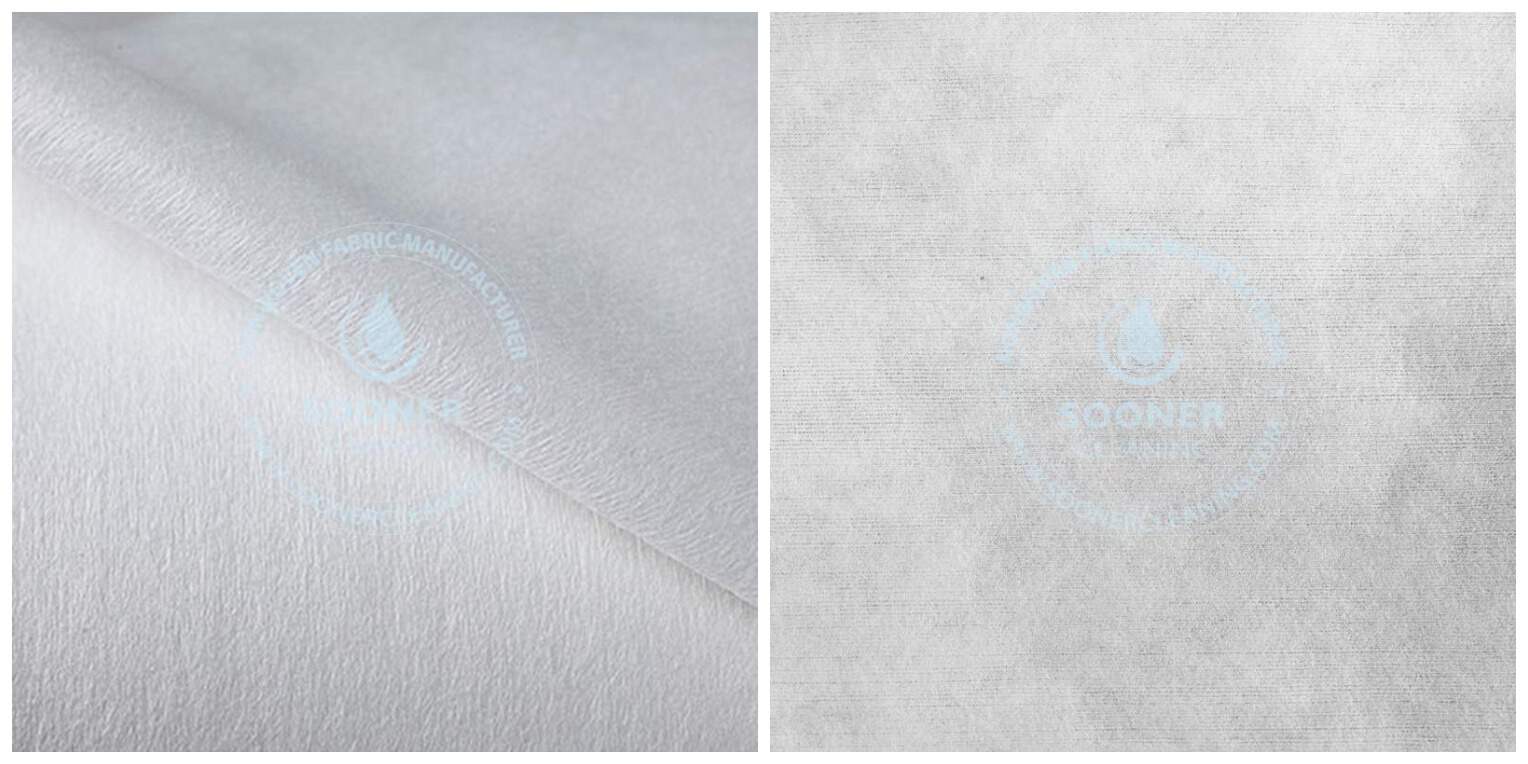
Biodegradable spunlace nonwoven fabric is progressively replacing conventional polyester materials in wet wipes. Not only is it environmentally friendly and biodegradable, but it also offers high performance in softness, absorbency, and wet strength, making it an ideal choice for baby wipes, care wipes, household cleaning wipes, and flushable wipes. This article provides a comprehensive guide to selecting biodegradable spunlace nonwoven fabric.
I. What is Biodegradable Spunlace Nonwoven Fabric?
Biodegradable spunlace nonwoven fabric is an eco-friendly nonwoven material produced by interlacing fibres into a web using high-pressure water jets (spunlace technology). Primary raw materials include: 100% viscose fibre, bamboo fibre, and Lyocell. These materials naturally decompose in compost, soil, or marine environments, preventing microplastic generation. They comply with EN13432, FDA, SGS, and international environmental certifications.
Core Advantages:
✔ Naturally degrades within 180 days without plastic residue
✔ Flushable and drain-safe (complies with EDANA/INDA standards)
✔ Soft and skin-friendly, suitable for baby and facial wipes
✔ Certified by SGS / FDA / MSDS / EN13432 environmental standards
II. Why is the wipes industry accelerating the adoption of biodegradable materials?
Global plastic bans drive material substitution
Regulations such as the EU's SUP Directive, US EPA requirements, and the UK Plastic Packaging Tax mandate plastic content labelling on wipes, accelerating adoption of plastic-free materials.
Mandatory eco-labelling on platforms like Amazon and Walmart
Cross-border e-commerce sellers must use biodegradable/compostable/flushable materials to qualify for eco-categories, boosting visibility and sales.
III. Typical Applications of Biodegradable Spunlace Nonwovens in Wet Wipes
Application Area
|
Recommended Material
|
Characteristics
|
Recommended GSM
|
Baby Wipes
|
Wood pulp + viscose, bamboo pulp fibres
|
Gentle on skin, non-irritating, alcohol-free
|
40gsm-60gsm
|
Facial Care & Beauty Wipes
|
100% viscose, bamboo pulp
|
Fine texture, softness, high absorbency
|
35gsm-50gsm
|
Flushable Wipes
|
Special dispersible fibres, blended long/short fibres
|
Dispersible, does not clog toilets
|
45gsm-60gsm
|
IV. Technical Parameters to Prioritise When Procuring Biodegradable Spunlace Nonwovens
Parameter
|
Recommended Range
|
Function
|
GSM Weight
|
35gsm – 80gsm
|
Influences thickness, softness, application
|
Absorbency
|
≥ 700%
|
Determines wiping moisture level, liquid retention capacity
|
Wet Strength
|
≥ 0.9kN/m
|
Resists tearing during use
|
Material Type
|
Lyocell/Viscose/PLA/Bamboo Pulp
|
Influences degradation rate and skin feel
|
Dispersibility
|
EDANA/INDA Certified
|
Flushability compliance
|
Biodegradability Certification
|
EN13432, FSC
|
Export eligibility to Europe and America
|
V. How to Select a Reliable Biodegradable Spunlace Supplier?
When selecting suppliers, prioritise the following capabilities:
✔ Own spunlace production line
✔ Formulation R&D for wood pulp/viscose/bamboo fibres
✔ Provision of EN13432, SGS, FDA certification reports
✔ Customisation of GSM, embossing, and flexibility
✔ Proven export experience (Europe/US/Southeast Asia)
VI. Frequently Asked Questions (FAQ)
Q1: Can biodegradable spunlace nonwoven fabrics be flushed down the toilet?
Yes, following specialised processing, they meet EDANA/INDA flushability standards. They fully decompose upon contact with water without causing pipe blockages.
Q2: What is the decomposition cycle?
Typically 90–180 days, depending on raw material composition and environmental conditions.
Q3: How should grammage (GSM) be selected for baby wipes versus cleaning wipes?
Baby/facial wipes: 35–55 gsm; Household and industrial wipes: 55–90 gsm.
Conclusion and Collaboration Invitation
Whether you are a wipe brand owner, OEM manufacturer, cross-border seller, or raw material purchaser, proactively adopting eco-friendly materials will become a key competitive advantage in future markets. Should you be seeking biodegradable spunlace nonwovens or flushable wipe materials such as Lyocell, viscose, or bamboo fibre, we invite you to contact us for samples and technical support!