
In the world of textiles, a quiet revolution is changing what we throw away. When you grab a wipe to clean a counter or remove your makeup, you‘re holding a marvel of modern engineering. For decades, the debate between traditional woven textiles and modern nonwoven fabrics has defined the hygiene and cleaning industries.
Today, we stand at a pivotal moment. As global regulations tighten and consumer awareness peaks, one question dominates: How do we maintain convenience without sacrificing the planet?
The answer lies in biodegradable spunlace nonwoven fabric. At Soonercleaning, we believe this isn‘t just a trend—it’s the inevitable mainstream future of all wiping cloths.
To appreciate the innovation, we must first understand the structure.
Traditional woven fabrics are made by interlacing yarns. This creates durability but also requires time-consuming production. In contrast, the nonwoven industry was built on efficiency. Instead of weaving, we bond fibers together mechanically, chemically, or thermally.
The beauty of spunlace lies in its purity. Unlike other methods that use chemical binders to hold fibers together, spunlace relies purely on physical entanglement.
High-speed jets of water penetrate the fiber web, twisting and wrapping the fibers around each other. This mechanical bond creates a strong, lint-free, and highly absorbent fabric. Because no chemicals are used, the resulting material is inherently safer for skin contact—ideal for baby wipes, facial cleansing cloths, and medical applications .
The nonwoven industry is undergoing its biggest shift since the invention of spunlace. The driving force? The EU Single-Use Plastics Directive.
As of recent years, any wipe containing plastic fibers must carry a “contains plastic” warning label in European markets . This has sent shockwaves through the supply chain. Major brands are now urgently seeking alternatives to synthetic materials.
So, how do we meet this demand? By re-engineering the spunlace process with next-generation fibers.
Modern biodegradable spunlace nonwoven fabric combines the mechanical integrity of hydroentanglement with the ecological benefits of plant-based materials.
In traditional nonwoven production, chemical bonding agents could hinder biodegradability. In spunlace, the bond is purely physical. This means that when you choose a biodegradable fiber blend, the entire substrate is compostable. It‘s a complete ecosystem of sustainability.
The transition to biodegradable spunlace is not limited to one niche. It is expanding across every category where wipes are used:
✅Personal Care & Baby Wipes: Parents are increasingly seeking plastic-free options for sensitive baby skin .
As a leading manufacturer in the spunlace nonwoven industry, we have invested heavily in R&D to master the transition to biodegradability. We understand that making the switch can be complex.
When you choose us as your spunlace nonwoven fabric supplier, you gain access to: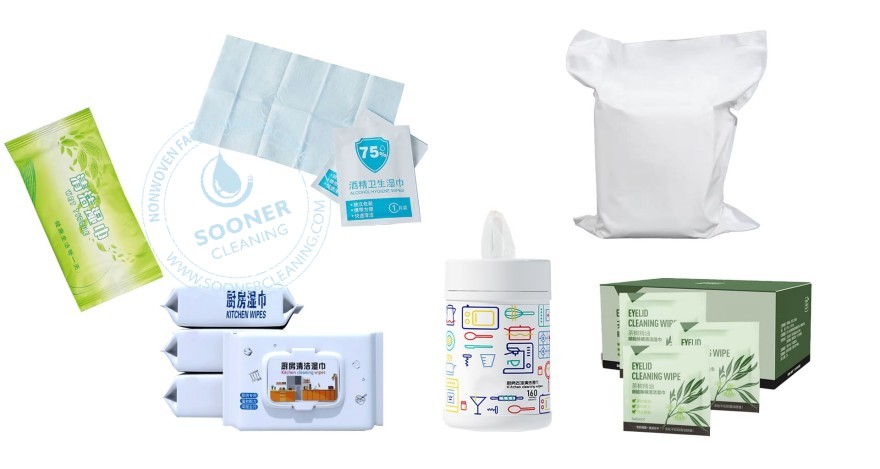
The era of single-use plastics in hygiene is coming to a close. The nonwoven industry has reached a turning point where ecology and economy align. Biodegradable spunlace fabric is not just a premium alternative; it is becoming the standard.
By embracing hydroentanglement technology and natural fiber bonding, we can produce wiping cloths that clean our homes without trashing our planet.