
Wet wipes cover a lot of uses, and each one needs specific fabric properties. Before evaluating options, you should understand what spunlace nonwoven fabric is and how its hydroentangled structure delivers better softness and liquid management than other technologies.
-Liquid retention and release
-Mechanical strength when wet
-Surface texture that fits the intended use
-Compatibility with your formulation chemistries
-Ability to handle high-speed converting
-Proper permeability for solution saturation
-Roll stability and unwind characteristics of spunlace nonwoven roll goods
-Softness against skin (often achieved with viscose polyester nonwoven blends)
-Durability during use
-Lint-free performance
-Visual appearance
Use this spunlace nonwoven GSM guide when determining fabric weight for your application:
| GSM Range | Typical Applications | Characteristics |
| 35-45 | Light-duty facial wipes | Soft, economical |
| 45-55 | Baby wipes, makeup wipes | Balanced performance |
| 55-70 | Heavy-duty cleaning wipes | Stronger, more durable |
| 70-90 | Industrial wipes | Maximum strength |
| 90+ | Premium products | Thick, highly absorbent |
When evaluating how to choose nonwoven for wet wipes, fiber composition matters most.
Viscose-based wipes: Excellent liquid absorption and soft hand feel. Biodegradable spunlace nonwoven options are available. Wet strength is lower compared to polyester.
Polyester-based wipes: Superior wet strength and excellent durability. Lower absorption capacity but cost-effective. Often blended in viscose polyester nonwoven formulations.
Cotton wipes: Premium soft texture, natural and hypoallergenic. Excellent for sensitive skin and eco-friendly nonwoven cosmetics.
Blend Ratios and Performance:
| Blend Ratio | Absorption | Strength | Cost | Best For |
| 100% Viscose | Excellent | Moderate | Medium | Premium baby wipes |
| 100% Polyester | Good | Excellent | Low | Industrial wipes |
| 70/30 PET/Viscose | Good | Very Good | Low-Medium | General purpose |
| 50/50 PET/Viscose | Very Good | Good | Medium | Balanced wipes |
| 30/70 PET/Viscose | Excellent | Good | Medium-High | High-end baby wipes |
| 100% Cotton | Excellent | Moderate | High | Premium/sensitive skin |
When comparing spunlace vs spunbond nonwoven, the choice affects performance:
Spunlace (hydroentangled): Superior softness, good liquid absorption, versatile fiber combinations—the standard choice for most wet wipes.
Spunbond: Cost-effective, good strength, lower softness, limited liquid retention—common in economy wipes.
Thermal bond and needlepunch: Used in specific industrial or high-bulk applications where texture matters more than softness.
-Plain/Flat: Smooth surface, uniform solution distribution, cost-effective
-Embossed patterns: Enhanced appearance, improved cleaning action
-Diamond/check patterns: Optimized solution release, traditional wipe appearance
-Unique textures: 3D patterns for specific functions, custom design possibilities
-Solution compatibility: pH range, surfactant interactions, preservative effects
-Converting line requirements: Tensile strength, elongation, friction characteristics
-Packaging considerations: Sealability, print surface, fold characteristics
Choosing the right spunlace nonwoven fabric manufacturer or spunlace nonwoven supplier China matters as much as picking the fabric itself.
-Manufacturing scale (line width, annual capacity)
-Flexibility for custom spunlace nonwoven OEM orders
-Geographic production locations for supply chain resilience
-ISO 9001/ISO 13485 certification
-GMP (Good Manufacturing Practice)
-Traceability systems for raw materials
-OEKO-TEX Standard 100, FDA compliance where applicable
-FSC/PEFC for wood-based fibers, GOTS for organic cotton
-Recycled content verification for sustainable nonwoven fabric 2026
-Custom formulation assistance
-Prototyping and sampling
-Performance testing capabilities
List your priorities and weight them. For example: price 30%, quality 25%, lead time 15%, technical support 15%, certifications 10%, sustainability 5%.
-Multiple GSM options
-Different blend ratios
-Test with your actual formulation
-Physical testing: Tensile strength (dry and wet), elongation, absorption rate
-Application testing: Simulated wipe use, compatibility, package filling
-Consumer perception: Panels for softness and durability
-Visit production facilities when possible
-Review quality control processes
-Assess capacity for flushable spunlace nonwoven if required
-Sample quantities and pricing
-Trial order conditions
-Volume commitment requirements
Selecting based on price alone: Quality variations can increase total costs. Supplier stability affects your supply security.
Ignoring formulation compatibility: Chemical interactions can damage fibers. Solution pH affects fabric integrity.
Overlooking technical support: Problem-solving capabilities matter. Responsive suppliers reduce business risk.
Neglecting sustainability requirements: Consumer demand and regulatory requirements for sustainable nonwoven fabric 2026 are tightening.
Insufficient testing: Lab results don't always predict field performance. Long-term stability testing is essential.
When selecting wet wipe substrates, think about trends that will shape the industry beyond 2026:
Regulatory changes: Single-use plastic restrictions, mandatory recycled content, extended producer responsibility.
Consumer preferences: Demand for biodegradable wet wipes material, natural fibers, and transparency.
Technology evolution: New fiber developments, enhanced processing capabilities, custom spunlace nonwoven OEM innovations.
Supply chain dynamics: Raw material availability, geographic supply risks, price volatility.
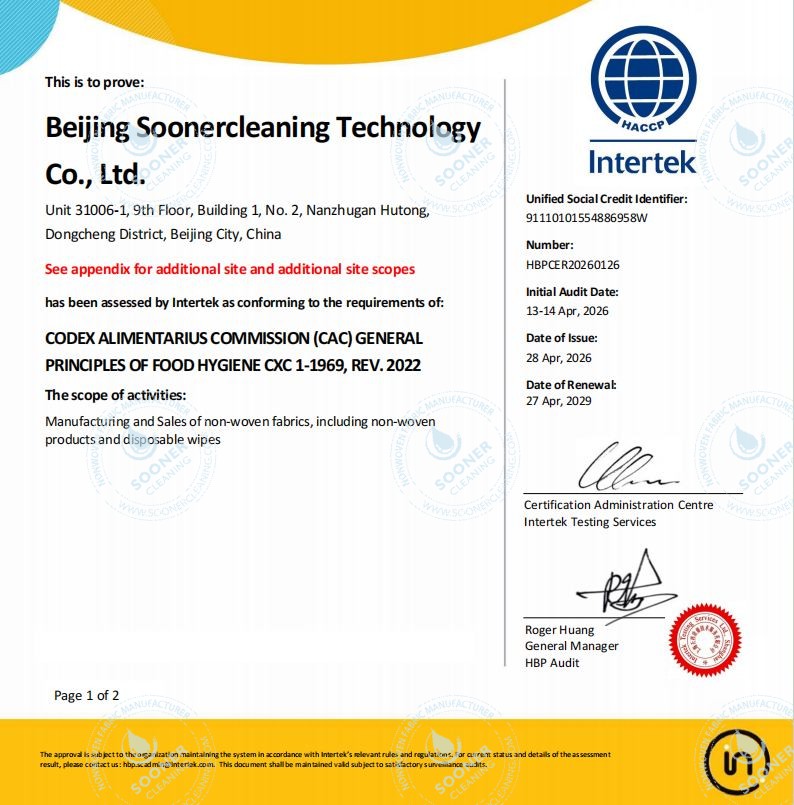
Choosing the right nonwoven fabric for wet wipes means evaluating GSM, fiber composition, construction methods, and supplier capabilities. Whether you need spunlace nonwoven for wet wipes, flushable spunlace nonwoven that meets INDA/EDANA standards, or viscose polyester nonwoven blends for balanced performance, working with a reliable spunlace nonwoven fabric manufacturer ensures consistent quality and supply.
For businesses looking for sustainable nonwoven fabric 2026 solutions, partner with an experienced spunlace nonwoven supplier China who offers custom spunlace nonwoven OEM services, full certifications, and technical support. This positions your products for success in a market that's getting more competitive and environmentally conscious.
Put time into thorough evaluation, comprehensive testing, and building relationships with key suppliers. The effort pays off through consistent quality, competitive costs, and support for innovative product development.