
Before diving into biodegradable options, let's cover the basics. Spunlace nonwoven fabric—also called hydroentangled nonwoven fabric—is made by shooting high-pressure water jets at fiber webs. The water tangles the fibers together, creating a soft, cloth-like material that's surprisingly strong. This process produces everything from spunlace nonwoven roll goods to specialized products like flushable spunlace nonwoven for specific applications.
Biodegradation is the natural breakdown of materials by microorganisms into water, carbon dioxide, and biomass. For a fabric to qualify as biodegradable spunlace nonwoven, it must meet specific standards:
-Decompose naturally within 180 days to 2 years, depending on conditions
-Leave no harmful residues or toxic byproducts behind
-Break down in various environments—soil, water, and composting facilities
When you compare spunlace vs spunbond nonwoven, spunlace has a clear edge: it can use natural fibers that biodegrade much faster than synthetic alternatives. This makes it the preferred choice for eco-conscious product lines.
Compliance isn't optional anymore. Here's what manufacturers and brands need to know:
-Single-Use Plastics Directive (SUPD) compliance is mandatory
-Extended Producer Responsibility (EPR) requirements affect how products are managed at end-of-life
-Recycled content mandates are expanding into packaging regulations
-California Senate Bill 54 sets strict requirements for single-use products
-FTC Green Guides govern how you can market environmental claims
-State-level flushability standards vary but are getting stricter
-ISO 14855 defines biodegradability testing protocols
-EN 13432 covers compostability certification requirements
-OECD guidelines address aquatic environment safety
Viscose (Rayon): Made from wood pulp with FSC or PEFC certification. It biodegrades in 1-5 months under the right conditions. The texture is soft, and liquid absorption is excellent. Many manufacturers use viscose polyester nonwoven blends to balance performance with sustainability.
Cotton: 100% natural and fully biodegradable. Decomposition takes 1-5 months. It's the top choice for eco-friendly nonwoven cosmetics because of its superior skin compatibility.
Bamboo: A fast-growing renewable resource with natural antibacterial properties. It biodegrades within 6 months.
Hemp: Extremely durable and requires minimal pesticides during cultivation. Biodegrades within 3 months.
PLA (Polylactic Acid): Derived from corn starch or sugarcane. It's certified for industrial composting and offers strength comparable to polypropylene.
PBAT (Polybutyrate Adipate Terephthalate): A fully biodegradable aliphatic-aromatic copolyester with excellent flexibility and film-forming properties.
If you're marketing products as flushable, you need to follow industry guidelines carefully. Any spunlace nonwoven factory making flushable products should adhere to these standards:
INDA/EDANA Flushability Guidelines: These guidelines use a seven-category classification system with specific dispersibility testing requirements. The 2024 updates introduced enhanced dispersibility protocols and stricter sizing criteria.
Don't make unsubstantiated "flushable" claims. Include clear disposal instructions on your packaging. And always verify that your flushable spunlace nonwoven is actually compatible with municipal wastewater systems.
Personal Care: Spunlace nonwoven for wet wipes—including baby wipes and makeup remover wipes—represents a huge market. Feminine hygiene products and adult incontinence products are also shifting toward biodegradable materials.
Medical Products: Biodegradable wound dressings and surgical gown components are gaining traction as healthcare facilities look to reduce waste.
Household Cleaning: Kitchen wipes with compostable options and floor cleaning cloths are moving toward sustainable materials.
Cosmetic Applications: Eco-friendly nonwoven cosmetics like facial masks and cleansing pads are in high demand. Biodegradable wet wipes material for makeup removal is becoming a standard requirement for premium brands.
Selecting the right material depends on your specific requirements. Here's what to consider:
| Factor | Consideration |
| Fiber Composition | Viscose for softness, cotton for natural appeal, PLA for compostability |
| Fabric Weight | 30-60 GSM is standard for wipes (see spunlace nonwoven GSM guide) |
| Biodegradability | Verify certifications if offering biodegradable wet wipes material |
| Flushability | Ensure INDA/EDANA compliance for flushable spunlace nonwoven |
Leading spunlace nonwoven fabric manufacturers are adopting these practices:
Water Management: Closed-loop water recycling systems are now standard. The best facilities have significantly reduced water consumption per meter of fabric produced.
Energy Efficiency: Renewable energy adoption is increasing. Heat recovery systems capture and reuse thermal energy from production processes.
Chemical Management: REACH-compliant dyes and finishes are essential. Top suppliers maintain restricted substance lists (RSL) and adhere to them strictly.
Waste Reduction: Edge trim recycling programs recover usable fiber. Defect fabric gets repurposed rather than discarded.
You don't have to choose between performance and biodegradability. Here's what works for different applications:
| Application | Recommended Materials | Key Properties |
| Baby Wipes | Viscose/Cotton blend | Softness, absorption |
| Industrial Wipes | PLA/Cotton blend | Strength, durability |
| Medical Products | Cotton or PLA | Sterilization compatibility |
| Cosmetics | Viscose | Smooth texture |
Biodegradable materials typically cost 15-40% more than conventional options. The price difference comes from higher raw material costs, limited production scale, and additional certification expenses.
But costs are coming down. As production volumes increase, technology improves, and more suppliers enter the market, the gap is narrowing. In some applications, the price premium is already below 10%.
Regulatory Pressure: Single-use plastic restrictions are expanding globally. Extended producer responsibility programs are becoming standard in more jurisdictions.
Consumer Demand: Environmental awareness is driving purchasing decisions. More consumers are willing to pay a premium for sustainable nonwoven fabric in 2026.
Brand Commitments: Major FMCG companies have made public pledges to sustainable sourcing. Supply chain sustainability initiatives are now standard procurement requirements.
Brand Commitments: Major FMCG companies have made public pledges to sustainable sourcing. Supply chain sustainability initiatives are now standard procurement requirements.
If you're looking for custom spunlace nonwoven OEM solutions, here's my advice based on years of working with suppliers:
1.Partner with certified spunlace nonwoven suppliers in China who provide full documentation—not just certificates, but test reports and chain-of-custody records.
2.Request biodegradable spunlace nonwoven test reports that show actual biodegradation rates under specific conditions.
3.Verify spunlace nonwoven roll goods quality consistency. Ask for batch-to-batch variation data.
4.Make sure viscose polyester nonwoven blends meet your specific application requirements. Don't assume all blends perform the same way.
5.Confirm flushable spunlace nonwoven certification where applicable. Not all "flushable" claims are backed by proper testing.
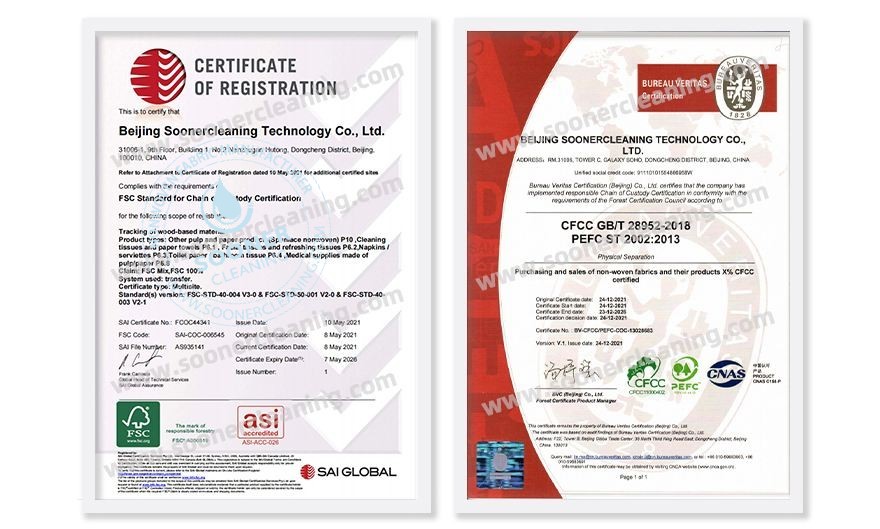
Biodegradable spunlace nonwoven fabrics are a practical path toward sustainable product development. Understanding the regulatory requirements, material options, and best practices helps you make informed decisions when selecting a spunlace nonwoven fabric manufacturer.
As technology advances and costs decrease, biodegradable alternatives will become accessible across more application sectors. Whether you're sourcing spunlace nonwoven for wet wipes, developing eco-friendly nonwoven cosmetics, or looking for sustainable nonwoven fabric solutions in 2026, partnering with an experienced spunlace nonwoven supplier in China ensures compliance, quality, and market readiness.
Brands that adopt sustainable nonwoven solutions now will be better positioned as regulations tighten and consumer preferences continue shifting toward environmentally responsible products. For businesses figuring out how to choose nonwoven for wet wipes or seeking custom spunlace nonwoven OEM services, the answer is straightforward: select materials that balance performance, cost, and environmental impact—and work with suppliers who can prove their claims with data, not just marketing.